
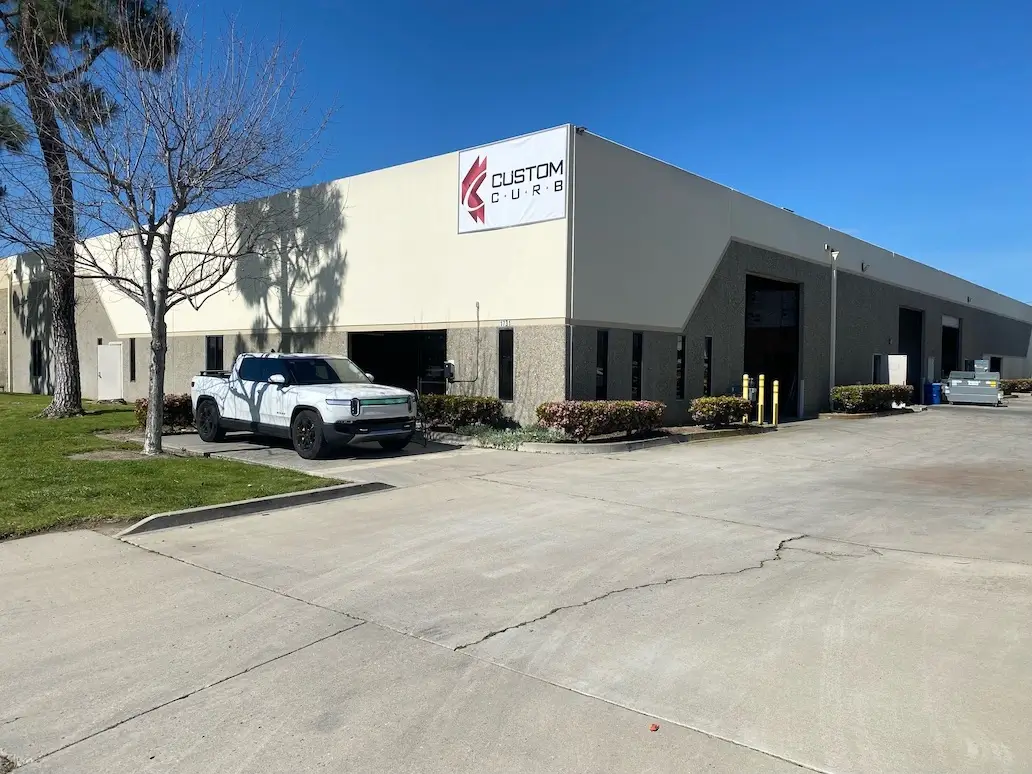
A data center roof curb is the fabricated steel frame that supports and seals a rooftop HVAC unit on a mission-critical facility. But on a data center build, what sets a data center roof curb apart is less the metal than the procurement risk behind it: schedule, submittal turnaround, and single-source accountability. The product category is the same one used across commercial construction; what changes is the tolerance for error. The curb sits on the critical path between structure and HVAC set, so a late or non-conforming one holds up a building whose entire value proposition is uptime.
If you’re specifying curbs on your first mission-critical project, here’s what to check.
Why is a data center curb held to a higher standard?
The bar comes from the facility’s uptime expectations, not from the curb itself. Most enterprise data centers target the Uptime Institute’s Tier III rating (concurrently maintainable), which means cooling equipment can be serviced without taking the facility offline. That expectation presses down onto every rooftop component: vibration has to be isolated so it doesn’t fatigue the structure, welds have to hold, and the roof has to stay weather-tight around a high count of penetrations. A curb is a small line item that can create an outsized schedule problem.
Which curb types does a data center build need?
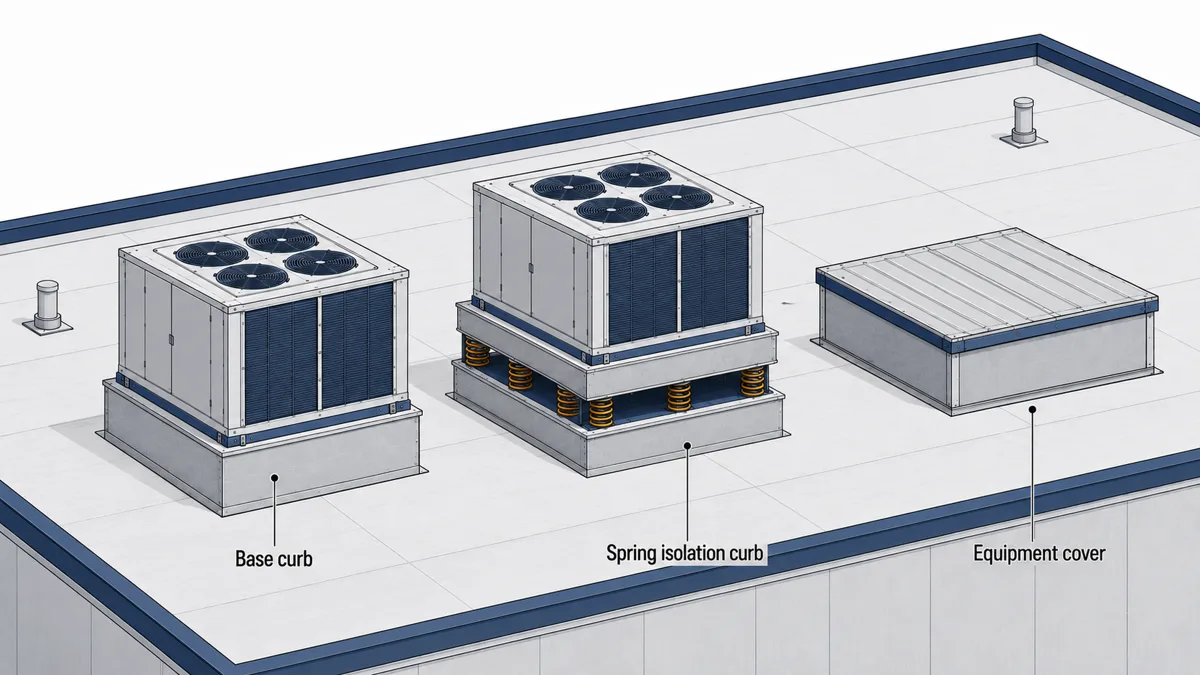
Most builds draw on three, and your procurement team should treat them differently:
| Curb type | Role on the build | Procurement profile |
|---|---|---|
| Fully welded insulated base curbs | Mount and seal standard rooftop units | High volume; ordered early and in bulk |
| Spring isolation curbs | Isolate HVAC vibration from the structure | Long-lead; technical review; engineered to each unit |
| Equipment covers | Weather-close open curbs when units are late | Low volume; high urgency, late in the build |
Base curbs are the foundation. Because they’re insulated, they carry a thermal break that keeps the curb’s metal from sweating where conditioned supply air meets ambient temperatures, a moisture risk you don’t want sitting over live equipment. ASHRAE energy and condensation-control guidance sets how much insulation the curb needs. A spring isolation curb is a two-piece curb with steel springs between a base curb and an upper curb, so the vibration from a running rooftop unit is absorbed above the roof instead of transmitting into the building. The full engineering lives on our spring isolation curb page. Equipment covers matter more than their size suggests: when HVAC delivery slips, which happens across the industry, an open curb is a hole in the roof, and a cover keeps the rest of the build moving.
What should you ask a curb supplier before specifying?
Five questions separate a supplier who protects your schedule from one who becomes it:
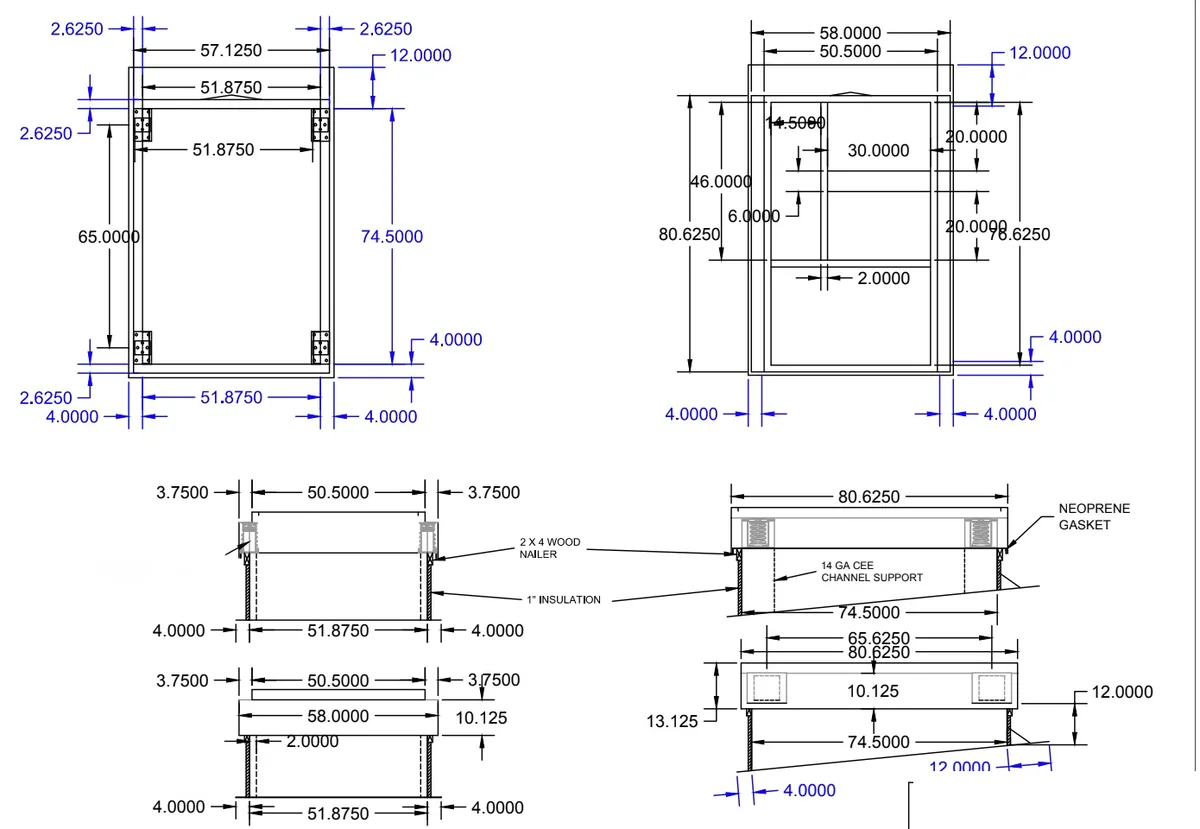
- Show me a weld map, the code you build to, and mill certs on the steel. Curbs combine structural steel and lighter sheet steel, governed respectively by AWS D1.1 (structural, 1/8 in and thicker) and AWS D1.3 (sheet steel, 3/16 in and thinner). Poor welds are a known failure mode in this category.
- What’s your submittal turnaround on 200-plus curbs? Submittals sit on your design-review critical path; a slow package delays everything behind it.
- Give me a committed lead time for my actual quantity, not an industry average. Lead time scales with volume and technical review, so a date you can build around beats a generic range.
- Who answers when there’s an RFI? A single point of contact who actually designed the curb removes a layer of runaround.
- What’s your freight lane and transit plan to my site? Clean fabrication means nothing if the freight slips.
How does curb procurement fit a fast-track schedule?
On a fast-track design-build job, the design isn’t finished when construction starts. The team releases packages like foundations and structural steel for pricing and build before the full drawing set is complete, per the AIA-AGC Primer on Project Delivery. So curb specs often aren’t final at bid. A supplier who can design from your unit specs and roof details, without a site visit, and hold a date lets the curb keep pace with the structure. For the full Tier-3 specification checklist, see our GC’s spec guide.
Where does the supplier-side risk actually live?
Three places: welds, lead time, and submittal accuracy. Factory curbs that ship with rooftop units don’t arrive fully welded and pitch-corrected for a sloped metal-building roof; a custom, fully welded, pitch-corrected curb does, and on a pitched roof it lets the unit sit dead level. SMACNA fabrication standards govern the sheet-metal and insulation work behind that. Get the lead time in writing, and confirm the submittal package will clear your reviewers the first time.
Frequently asked questions
Is a data center roof curb a special product or a standard curb?
It’s the same product category, held to mission-critical tolerances. The real difference is procurement risk (schedule, submittals, accountability), not a different part number.
Do I have to prequalify a curb supplier as a subcontractor?
Generally no. A curb maker is a material supplier, not a subcontractor. With no field crews and no site presence, the sub-tier insurance and prequalification burden usually doesn’t apply.
Should data center curbs be galvanized steel or aluminum?
Galvanized steel for most of the build. It’s the load-bearing workhorse for the heavy units that run around the clock. Aluminum is the premium choice for fully exposed roofs where appearance matters, which is usually a secondary concern under compute-cooling equipment.
What’s the long-lead item among data center curbs?
Spring isolation curbs. They’re engineered to each unit and carry technical review, so they move slower than base curbs. Order them first.
Can a curb be designed if the HVAC unit isn’t final at bid?
Yes. Design starts from the unit manufacturer’s curb requirements and your roof conditions, so it can proceed from specs on a fast-track schedule.
Ready to de-risk your curb package?
We’ll quote your project. Send Custom Curb your unit specs, roof details, and quantities, and you’ll get a committed date to build around.